As schools continue to embrace digital transformation, many administrators are asking the same question:
If we’re going to invest in a school portal, what features do we actually need?
The answer goes beyond simply creating online accounts for students and teachers.
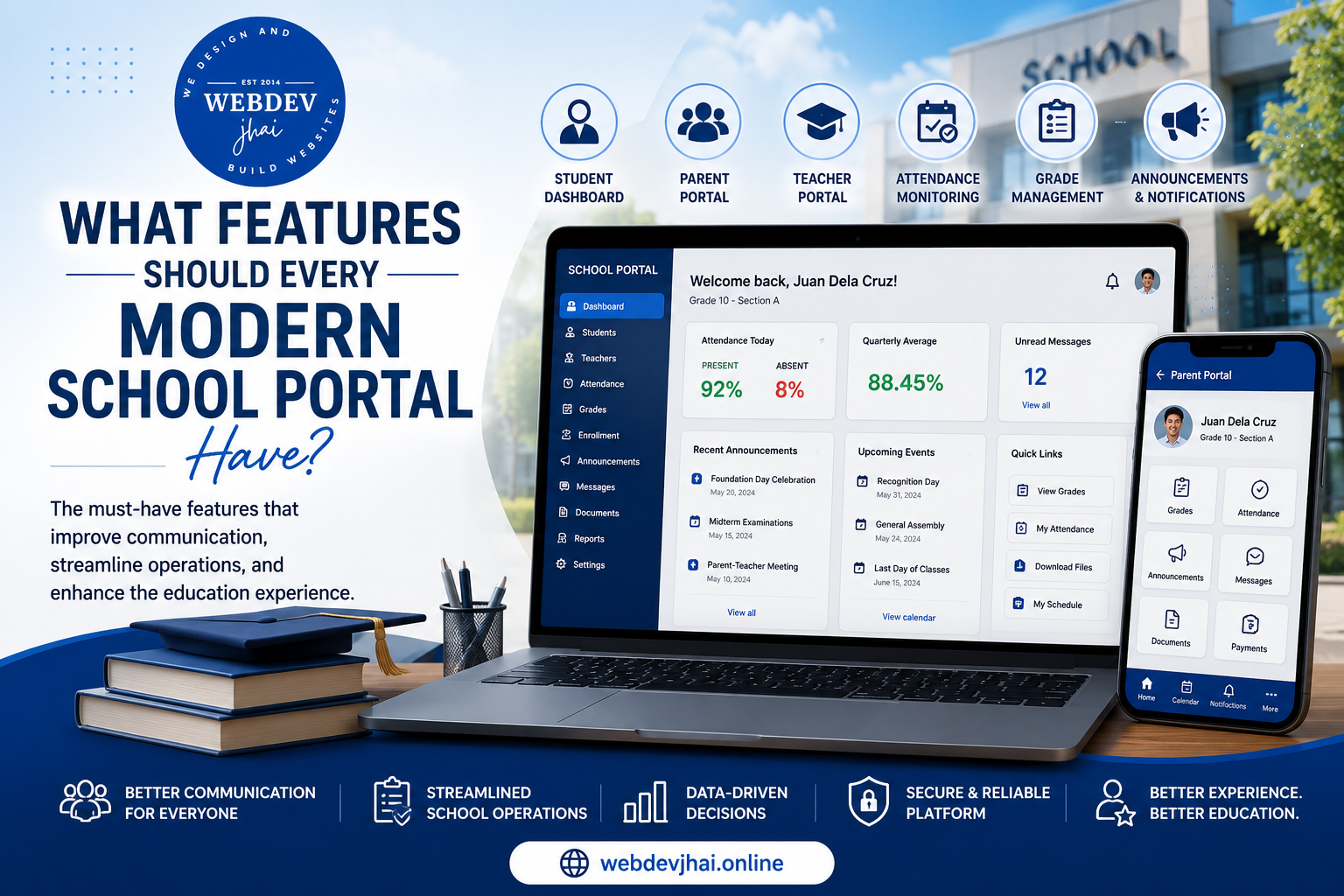
A modern school portal should serve as a centralized platform that improves communication, streamlines administrative processes, and enhances the educational experience for everyone involved.
Whether you’re managing a private school, academy, college, or educational institution, the right portal can save countless hours while improving transparency and efficiency.
Let’s explore the essential features every modern school portal should include.
1. Student Dashboard
The student dashboard serves as the primary workspace for learners.
Students should be able to:
- View their class schedules
- Monitor grades and academic progress
- Track attendance records
- Receive school announcements
- Access important documents
- Review assignments and deadlines
A well-designed student dashboard encourages accountability and keeps students informed about their academic responsibilities.
2. Parent Portal
Parents want visibility into their child’s academic journey.
A parent portal provides real-time access to:
- Student grades
- Attendance records
- School announcements
- Disciplinary reports
- School activities
- Payment reminders
When parents stay informed, they become more engaged in supporting student success.
3. Teacher Portal
Teachers need tools that simplify classroom management and reporting.
A modern teacher portal should include:
- Class management
- Attendance encoding
- Grade submission
- Student performance tracking
- Announcement posting
- Communication tools
This reduces administrative workload and allows teachers to focus more on instruction.
4. Attendance Monitoring System
Attendance remains one of the most important records schools manage daily.
A digital attendance system provides:
- Faster attendance recording
- Automated reporting
- Historical attendance tracking
- Parent visibility
- Attendance analytics
Instead of manual logs and spreadsheets, schools gain accurate, real-time data.
5. Grade Management System
Grade processing can become time-consuming when managed manually.
A digital grading system allows schools to:
- Encode grades efficiently
- Generate report cards
- Track academic performance
- Calculate averages automatically
- Provide student and parent access
This improves accuracy and reduces administrative effort.
6. Enrollment Management
Enrollment is often one of the busiest periods for schools.
An online enrollment module can help manage:
- New student registration
- Application reviews
- Enrollment approval workflows
- Student information records
- Document submissions
This creates a smoother experience for both school personnel and families.
7. School Announcements & Notifications
Communication is critical in any educational institution.
A school portal should provide:
- School-wide announcements
- Event notifications
- Emergency advisories
- Academic reminders
- Administrative updates
Centralized communication ensures important information reaches the right audience quickly.
8. Messaging System
Many schools rely on multiple communication channels, creating confusion and delays.
An integrated messaging system allows:
- Parent-teacher communication
- Student-teacher messaging
- Administrative notifications
- Internal school communication
Everything remains organized within one platform.
9. Document Repository
Schools manage hundreds of documents throughout the year.
A document repository allows users to access:
- School forms
- Student records
- Policies and handbooks
- Enrollment requirements
- Official announcements
This eliminates the need for repeated requests and manual document distribution.
10. Violation Monitoring Dashboard
One of the most valuable modern additions to a school portal is a Violation Monitoring Dashboard.
This feature provides:
- Violation records
- Incident reports
- Guidance referrals
- Disciplinary actions
- Parent notifications
- Historical tracking
By providing transparency and accountability, schools can better manage student conduct while keeping parents informed.
11. Administrative Dashboard & Analytics
School leaders need access to meaningful data.
An administrative dashboard should provide insights into:
- Student enrollment
- Attendance trends
- Academic performance
- Faculty activity
- Violation statistics
- System usage reports
These insights help administrators make informed decisions and improve school operations.
12. Mobile-Friendly Access
Today’s users expect convenience.
Students, parents, and teachers should be able to access the system from:
- Desktop computers
- Tablets
- Smartphones
A responsive portal ensures accessibility anytime, anywhere.
Looking Beyond Today’s Needs
Many schools focus only on solving current challenges.
However, a well-designed school portal should also support future growth.
As technology continues to evolve, schools may eventually expand their platform to include:
- Online learning modules
- Learning management systems (LMS)
- Digital assessments
- Virtual classrooms
- AI-powered analytics
- Automated reporting tools
Planning for scalability today can save significant costs in the future.
A modern school portal is more than a digital convenience.
It’s a strategic investment in communication, efficiency, transparency, and educational excellence.
The most successful schools are building connected ecosystems where students, parents, teachers, and administrators can collaborate through a single centralized platform.
If your institution is considering digital transformation, start by identifying the features that will create the greatest impact for your community.
Because the future of education isn’t just digital.
It’s connected.